Top 4 Construction Site Hazards

POSTED ON:

11/14/25

The construction industry is inherently risky, but OSHA has identified four hazards that consistently account for over 60% of all fatalities in the industry. These four hazards are falls, struck-by accidents, electrocution, and caught-in/between accidents. They are routinely referred to as the “fatal four”. It’s important to both understand these hazards, and be aware of ways to mitigate them, in order to keep people safe on the jobsite.

  • Falls: According to OSHA’s statistics, falls have accounted for anywhere between 33% to 40% of all construction fatalities. Falls typically occur in areas where there are unprotected edges, ladders are misused, or scaffolding is improperly utilized. Other factors, such as human misjudgment of risk, unstable working surfaces, and poor weather also contribute to an increased risk of falls.

Mitigation Tactics: Strategies such as personal fall arrest systems, guard rail systems, and controlling access to areas with increased potential for falls are all ways to help mitigate the risk of an employee being injured due to a fall.

  • Struck-by: Struck-by fatalities can happen due to several different types of hazards. These hazards include: an employee being hit by falling debris, moving equipment, or flying debris.

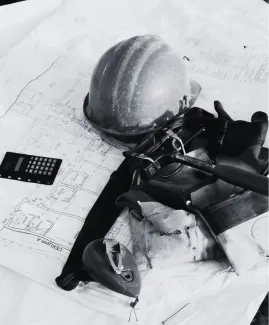
Mitigation Tactics: To protect themselves from falling/flying objects, employees should ensure they are always wearing a well-fitted hard hat on the jobsite. Employees must also work to maintain contact with the operators of any equipment operating near them. Finally, maintain good housekeeping practices, such as never resting equipment on guardrails or near the edge of elevated platforms.

  • Electrocution: Employees in the construction industry are exposed to electricity all day and can begin to be desensitized to the risks. However, improper use of electrical equipment can result in burns, shock, arc flashes, fire, and explosions. Exposed wiring, ungrounded equipment, working too close to power lines, and using power tools in wet conditions are all hazards that employees need to be aware of.

Mitigation Tactics: Always ensure the cords on your power tools and extension cords are in good condition, and that you have a robust lockout/tagout program in place. Additionally, employees tasked with doing more complicated electrical work should receive the proper level of training that corresponds to their job responsibilities.

  • Caught In/Between: OSHA defines a caught-in/between accident as a person being squeezed, caught, crushed, pinched, or compressed between two or more objects, or between parts of an object. Common examples include being sucked into moving machinery, a trench collapsing, or being pinned between equipment and an immovable object.

Mitigation Tactics: Properly guarding moving parts on machinery, using proper shoring techniques when working on a trench, avoiding loose-fitting clothing, and maintaining awareness of machines in operation are ways for employees to protect themselves.

Posted By

Categories

Risk Solutions

Recent Insights

OSHA Clarifies Recordkeeping Rules for Injuries Involving Personal Lithium-Ion Batteries

On January 20, 2026, the U.S. Occupational Safety and Health Administration (OSHA) issued a formal interpretation addressing whether injuries caused by personal rechargeable lithium-ion batteries brought into the workplace must be recorded on the OSHA 300 Log. There are several key takeaways listed below:

Toolbox Talks: A Simple Way to Strengthen Safety on Construction Jobsites

Around 90% of companies in the construction industry employ 20 or fewer employees. This can make it very difficult to ensure that employees are receiving the proper safety training, since resources like time and money are often limited. Those tasked with safety compliance usually have other responsibilities, making it hard for them to dedicate the necessary time to safety. However, one easy step that can be taken is the implementation of toolbox talks

Construction First Aid Kits

The construction industry has one of the highest injury and fatality rates of any industry. This is one of the reasons that construction sites are legally required to have a well-stocked first aid kit on hand. However, the standards can be vague and don’t always give specific guidance on what should be in the kit. Below, we’ve broken down both the standards governing these kits, and the meaning behind the classification and type, to help provide some clarity on an issue that every construction company deals with.

Portable Heater Safety

As the calendar flips to a new year, some of the coldest weather of the season has become entrenched throughout much of the country. There are many ways to try to mitigate the effects of the cold, and one of the most common ones is the use of portable heaters. Portable heaters can help keep employees warm and allow work to continue in areas where it might otherwise be too cold to work. However, they are not without risk. There were approximately 53,636 thermal burn injuries attributed to portable heaters from 2003 to 2013, according to the National Library of Medicine. It is important to know how to safely operate portable heaters as their usage rate peaks over the coming months.

Cold Stress

The upcoming holidays don’t just mark the end of this year and the beginning of a new one. They also signal the beginning of very cold weather for much of the country. This is important because from 2003 to 2019, cold exposure caused 31 deaths and 2,770 serious injuries to workers across the U.S. Thus, threats relating to cold stress should be taken very seriously.

Top 4 Construction Site Hazards

The construction industry is inherently risky, but OSHA has identified four hazards that consistently account for over 60% of all fatalities in the industry. These four hazards are falls, struck-by accidents, electrocution, and caught-in/between accidents. They are routinely referred to as the “fatal four”. It’s important to both understand these hazards, and be aware of ways to mitigate them, in order to keep people safe on the jobsite.

Preventing Construction Site Theft

Construction companies are more likely to experience theft than any other type of loss. According to the Insurance Journal, annual equipment theft alone costs the construction industry an estimated $1 billion—and that figure doesn’t even account for stolen raw materials or the productivity lost in the aftermath. Beyond the immediate financial impact, theft can lead to higher insurance premiums, costly project delays, and significant replacement expenses. That’s why preventing theft should be a top priority for every construction company.

Heat Stress Awareness – Early Warning Signs and How to React

As the hot summer months of June, July, and August approach, heat awareness becomes critically important. From 1992 to 2022, a total of 986 employees across all industries died from heat exposure. Of those 986 employees, 34% worked in the construction industry, according to the EPA. Furthermore, the first couple of hot weeks of the summer are especially important, as 50% to 70% of heat-related fatalities occur in the first few days of someone working in hot temperatures. Thus, it is important for those in the construction industry to be aware of the risks from working in the heat.

Construction Case Study

Trench Worker Buried Leads to Contractor LitigationIn 2019, a construction worker was buried under several tons of soil when a trench collapsed at a residential job site in Iowa. The trench was estimated to be 10 to 11 feet deep and lacked the protective systems required by OSHA, such as a trench box or appropriate shoring. The absence of this essential safety equipment resulted in significant physical injuries and lasting psychological trauma, including post-traumatic stress, anxiety, and depression.